Murrieta
Caulking & Grout Repair: When It Is Cosmetic and When It Is a Warning

Gregory Marin
Owner, RepairHero ·
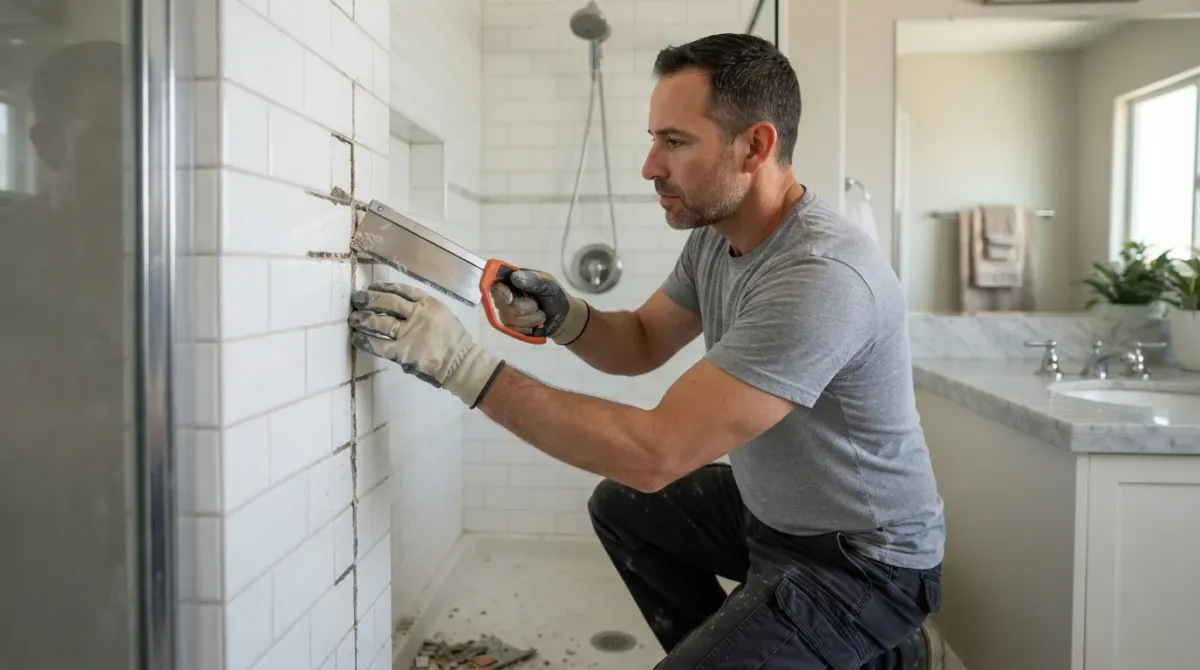
Caulking grout repair is usually routine bathroom maintenance. It becomes a warning sign when caulk or grout keeps failing in the same spot, dark mold returns, tile loosens, or walls and floors feel soft.
Key Takeaways
- Caulk seals flexible seams; grout fills rigid joints between tiles.
- Re-caulk shower work is usually cosmetic when the tile is solid and the damage is on the surface.
- Regrout shower work can help dingy or cracked joints, but it will not fix water behind tile.
- Angi lists bathroom re-caulking at $150-$550; HomeGuide lists shower or tub regrouting at $450-$2,000.
- RepairHero gives a free estimate, $0 trip charge, and a written quote before approved work starts.
Caulk vs. Grout: The Simple Difference
Caulk and grout are not interchangeable. Caulk is flexible, so it belongs in movement seams: tub-to-tile joints, shower corners, tile-to-counter seams, and trim transitions. Grout is rigid, so it belongs between tiles that are meant to stay still. A rigid material in a moving seam cracks; a flexible material smeared over failing grout can hide moisture.
In our experience quoting Murrieta punch lists, the easiest wins are surface-level: cracked caulk around a tub, a few gaps at the vanity backsplash, or grout that is dirty but still firm. Those jobs are contained when the tile is tight and the wall behind it feels solid.
When we look at coastal Oceanside bathrooms, salt air and steady humidity can make surface mildew show up faster around shower seams. That does not always mean a wall problem, but recurring dark growth in the same joint deserves a closer look.
For broader small-repair help, RepairHero’s Murrieta handyman service covers the kind of punch-list work homeowners often group with bathroom caulk and grout repair. You can also read more about our team.
Caulk & Grout Repair Costs in 2026
These are national and marketplace averages, not a RepairHero quote — your price comes from a free written quote. RepairHero quotes per job, has a $0 trip charge, and has a $160 minimum service call on approved work.
| Job | Typical 2026 cost | Notes |
|---|---|---|
| Re-caulk a tub/shower | $150-$550 | About $1.25-$4 per linear ft |
| Regrout a shower/tub | $450-$2,000 | Average around $700; sealer is $0.50-$1.50 per sq ft |
| Water behind tile to retile | $9-$37 per sq ft | Escalation work, not a caulk job |
Angi lists bathroom re-caulking at $150-$550. Bob Vila lists re-caulking a shower around $300, with a $1.25-$4 per linear foot range.
HomeGuide lists regrouting a shower or tub at $450-$2,000, with an average around $700 and grout sealer at $0.50-$1.50 per square foot. Fixr lists full retile work at $9-$37 per square foot when water has gotten behind the tile.
Angi also lists handyman marketplace labor at $50-$80 per hour. RepairHero does not publish a RepairHero hourly rate because your number comes from the specific scope, access, materials, and written quote.
When Caulking Grout Repair Is Mostly Cosmetic
Caulking grout repair is usually cosmetic when the tile is tight, the surface is dry, and the damaged area is visible and limited. That can mean old caulk that cracked at the tub line, a vanity backsplash seam that opened slightly, or grout that is stained but still hard.
A routine repair follows a boring order: remove the failing material, clean the joint, let the area dry, apply the right caulk or grout, and seal grout where appropriate. New caulk needs a clean surface, not old caulk, soap film, mildew, and loose grout.
A few bad grout joints can often be cleaned out and refilled. The tile has to be stable first. If tiles move under light pressure, the grout is not the real problem.
When we quote a job, we look at it first and put the number in writing before any work starts. For bathroom seams, that means checking whether the job is a simple re-caulk shower project, a regrout shower project, or a moisture problem hiding behind the finished surface.
Related bathroom punch-list issues are covered in RepairHero’s bathroom repair handyman guide.
Warning Signs Water May Be Behind the Tile
Treat failing caulk or grout as a warning sign when the same spot keeps cracking, the same dark mold returns, the wall or floor feels soft, tiles sound hollow, tiles loosen, or the bathroom has a musty smell.
Those signs point beyond surface maintenance. Water may be getting through the tile assembly and into the backer, wall cavity, or subfloor. Once the backing is wet or damaged, regrouting alone cannot restore it.
The EPA’s mold guidance says controlling moisture is the key to controlling mold indoors (EPA). That is the practical rule here too: do not hide moisture with new caulk, grout, primer, or paint.
Dark growth on surface caulk can be a cleaning and ventilation issue. Dark mold that keeps returning after the material is replaced is different. A spongy floor near a tub, a shower wall that gives under light pressure, or loose tiles around a wet corner can mean the substrate is compromised.
If the same bathroom also has drywall stains nearby, see RepairHero’s guide to water-damaged drywall in Murrieta for the right order: find the source, dry the area, then repair the finish.
Why Caulking Over Old Grout Is the Wrong Fix
Caulking over failing grout can trap moisture and hide movement. It may look cleaner for a little while, but the damaged joint underneath still exists.
Old grout should be cut out where it has failed. Clean and dry the joint, then use grout between stable tiles and caulk at corners or movement seams.
When to Stop and Bring in a Specialist
Re-caulk and regrout work are normal handyman jobs when the tile assembly is sound. Stop treating it as cosmetic when you find loose tile, wet backing, soft subfloor, widespread musty odor, or mold that appears to be inside the wall. A specialty contractor, a qualified plumber, or another specialist may need to handle hidden damage first.
RepairHero can help with straightforward caulk and grout work, small bathroom repairs, and scoping what is visible.
Frequently Asked Questions
What is the difference between caulk and grout?
Caulk seals flexible seams, such as tub-to-tile corners and tile-to-counter joints. Grout fills the rigid joints between tiles. They do different jobs, so failing grout should not be hidden under caulk.
How much does it cost to re-caulk or regrout a shower?
Angi lists bathroom re-caulking at $150-$550. HomeGuide lists shower or tub regrouting at $450-$2,000, with an average around $700 (Angi, HomeGuide).
When does failing grout mean a bigger problem?
Failing grout may mean a bigger problem when the same spot keeps opening, dark mold returns, the wall or floor feels soft or spongy, tiles sound hollow, tiles loosen, or the bathroom smells musty.
Can I just caulk over old grout?
No. Caulking over failing grout can trap moisture and hide the real problem. The loose or damaged grout should be cut out, the area cleaned, and the joint repaired with the right material.
Can a handyman regrout a shower?
Yes, re-caulk and regrout work are handyman jobs when the tile and backing are sound. Water behind tile, mold inside the wall, soft subfloor, or loose tile can require a specialty contractor.
Caulk and grout are inexpensive compared with hidden water damage, so the real value is knowing which problem you have. For a written quote on bathroom caulk, grout, or related small repairs, Get a free quote.

Gregory Marin — Owner, RepairHero
Gregory Marin is the owner of RepairHero (Grem Construction LLC) and has spent years handling home repairs for homeowners across Murrieta and Oceanside, California.
More about RepairHero →