Oceanside
Coastal Home Maintenance Checklist for Oceanside

Gregory Marin
Owner, RepairHero ·
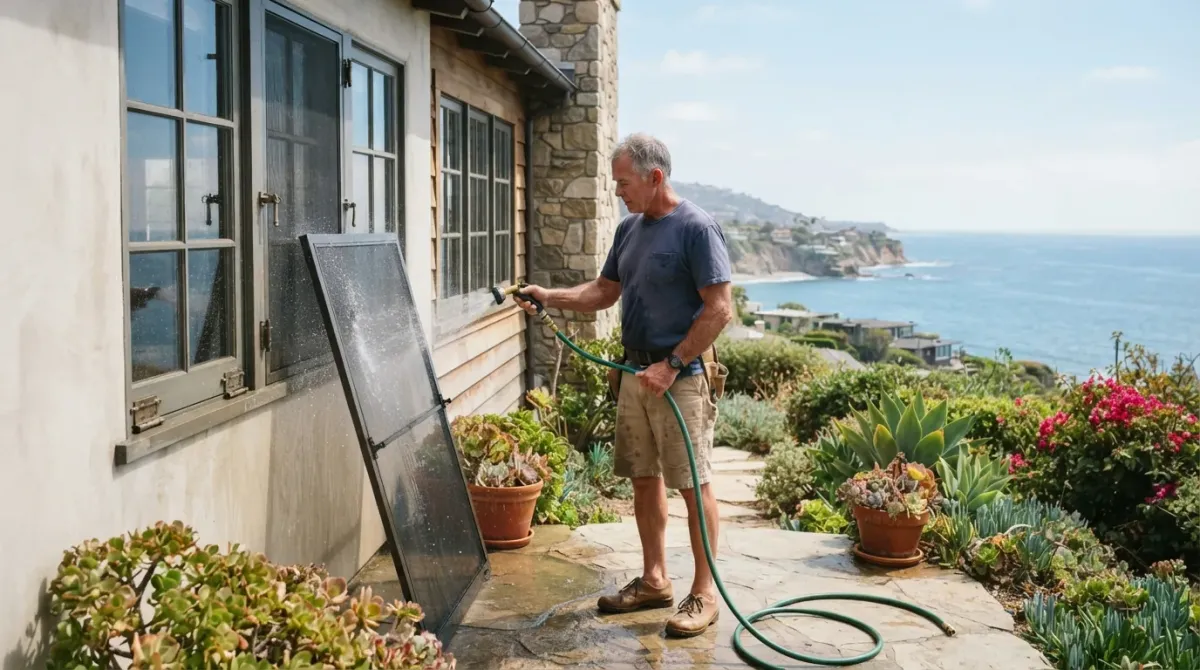
Coastal home maintenance in Oceanside is mostly salt control: rinse residue, protect hardware, clean tracks, reseal gaps, and fix early corrosion before it spreads into doors, screens, fences, and exterior trim.
Key Takeaways
- Marine air is among the most corrosive environments for galvanized metal (American Galvanizers Association), so coastal parts rust years sooner than inland.
- Rinsing salt off screens, windows, railings, tracks, and hardware is the easiest recurring habit.
- Fiberglass screen mesh and stainless or marine-grade hardware hold up better near salt air.
- RepairHero gives a free estimate, $0 trip charge, and a written quote before approved work starts.
For local help with small exterior repairs, see RepairHero’s Oceanside handyman service. You can also read more about our team before requesting work.
Why Coastal Home Maintenance Matters in Oceanside
Salt air home damage is a maintenance problem because it attacks the small parts first: screws, hinges, rollers, screens, post bases, latches, and exposed seams. Once those parts fail, bigger repairs follow.
Coastal salt air and humidity rot wood and corrode fasteners and hardware. The American Galvanizers Association rates marine atmospheres among the most corrosive for galvanized (zinc-coated) metal, so parts that may last 15-20 years inland can rust years sooner near the coast.
That gap is why Oceanside homes need a different rhythm than inland Murrieta homes. The work is not complicated, but it has to happen before the latch binds, the roller seizes, or the post base gets soft.
In our experience quoting Oceanside punch lists, coastal wear often shows up as several small issues at once: a dragging patio door, rusty gate hinge, torn screen, and cracked caulk.
Coastal Wear Signals to Watch
The table below uses source-reported figures to show where coastal conditions shorten useful life. These are maintenance signals, not RepairHero quotes.
| Area | Inland / dry-climate figure | Coastal figure | What to check |
|---|---|---|---|
| Galvanized fence wire, fasteners, and hardware | 15-20 years | A few years | Rust, loose brackets, gate sag, soft post bases |
| Sliding-door roller bearings | 10-15 years | 5-8 years | Grinding, dragging, jumping track, latch misalignment |
Sources: The American Galvanizers Association rates marine atmospheres among the most corrosive environments for galvanized (zinc-coated) metal in its coastal climate guidance. Angi reports coastal sliding-door roller bearings may corrode in 5-8 years versus 10-15 years in dry climates in its sliding glass door repair cost guide.
Monthly-Ish Salt Rinse Checklist
The single easiest coastal house upkeep habit is rinsing salt residue before it sits on metal and screen surfaces. Use a gentle hose rinse on exterior screens, window frames, railings, gate hardware, hinges, and patio-door tracks.
Do not pressure-wash delicate screens or force water into wall gaps. The point is to remove residue, not drive moisture behind trim.
For screens, RiteScreen says aluminum screen mesh and hardware can corrode in salt air, while fiberglass and stainless options last longer. This Old House also notes fiberglass mesh resists coastal corrosion better than aluminum.
When we look at coastal Oceanside jobs, aluminum mesh often tells the story fast. The screen may remain in place while the corners, spline, or frame hardware fails.
If your screens are torn, brittle, or corroded, our screen repair Oceanside guide explains when rescreening makes sense.
Seasonal Screens, Windows, and Seals Checklist
Each season, check window screens, window tracks, weatherstripping, exterior caulk, and trim seams. Salt and moisture do their worst work where dirt collects and water sits.
Start with screens. Look for white oxidation, torn mesh, brittle spline, loose corners, and corroded tabs. Fiberglass mesh is often the better replacement choice near the coast because RiteScreen and This Old House both point to better corrosion resistance than aluminum.
Then clean tracks and weep holes so water can drain. Check weatherstripping for gaps. Look around window perimeters for cracked caulk, separated joints, or stains that suggest water has been sitting behind trim.
The U.S. Environmental Protection Agency says moisture control is central to preventing mold growth in homes and building materials (EPA). For Oceanside exterior maintenance, that means small seal failures deserve attention before they become hidden water problems.
Seasonal Sliding Door Checklist
Sliding and patio doors need track cleaning, roller checks, latch checks, and corrosion-resistant parts near the coast. Angi says salt air can corrode sliding-door roller bearings in 5-8 years, compared with 10-15 years inland.
Start with the lower track. Vacuum grit, wipe the channel, and keep the drain path clear. A dirty track makes good rollers work harder and can turn a simple cleaning into roller replacement.
Next, listen to the door. Grinding, bumping, jumping, or a panel that drags on the bottom rail usually points to roller wear or height adjustment. Angi recommends extruded-aluminum frames and stainless rollers for coastal sliding doors.
When we quote a job, we look at it first and put the number in writing before any work starts. RepairHero quotes per job, with a free estimate, $0 trip charge, and a $160 minimum service call on approved work.
For deeper door symptoms, see our sliding door repair Oceanside guide.
Seasonal Fence, Gate, and Exterior Hardware Checklist
Fences and gates fail faster at the coast because salt, humidity, soil moisture, and movement meet at the same weak points. Check post bases, rails, hinges, latches, brackets, screws, and gate alignment every season.
Marine-grade or stainless materials hold up best under coastal exposure because salt air corrodes standard hardware quickly. That matters most on gates because hinges and latches move under load.
Look for rust streaks, loose screws, soft wood at post bases, sagging gates, and rails pulling away from posts. Seal exposed wood where appropriate and keep sprinklers from soaking the fence.
Localized damage is often repairable. Widespread rot, leaning across a full run, or structural wood failure is a bigger conversation with a specialty contractor. For the coastal fence version of this checklist, use our fence repair Oceanside guide.
Paint, Deck, Railing, and Caulk Checklist
Paint, deck coatings, railing finishes, and exterior caulk protect the materials underneath from salt and moisture. Once those coatings open up, coastal weather gets direct access to wood, fasteners, and seams.
Walk the exterior and look for peeling paint, bare wood, rust stains, cracked caulk, loose rail hardware, and places where trim joints have opened. Touch up small finish failures before water gets behind them.
Caulk is especially easy to ignore because it looks minor until it fails. Check around windows, door trim, penetrations, and exterior transitions. Reseal gaps before the rainy season and after any repair that disturbs trim.
Skip roof flashing, roofing, major glass seals, and structural rot as handyman work. Those need a specialty contractor or qualified glass professional.
Frequently Asked Questions
How does salt air damage a house?
Salt air damages a house by carrying moisture and chloride onto metal, wood, screens, tracks, and exterior hardware. The American Galvanizers Association rates marine air among the most corrosive environments for galvanized metal, so parts that last 15-20 years inland can rust years sooner at the coast.
What coastal maintenance should I do most often?
The most frequent coastal maintenance is rinsing salt from screens, windows, railings, hinges, latches, and sliding-door tracks, then resealing exterior gaps before moisture gets inside.
What materials hold up best near the coast?
Near the coast, fiberglass screen mesh, stainless or marine-grade hardware, stainless rollers, extruded-aluminum sliding-door frames, and sealed wood usually hold up better than aluminum mesh or basic galvanized parts.
How often should I do coastal maintenance?
Do quick salt rinses monthly-ish, especially after marine layer, wind, or salt spray exposure, and do a full seasonal check of screens, doors, fences, hardware, caulk, and paint.
Can a handyman handle coastal upkeep?
Yes. Screens, sliding-door tracks and rollers, fence hardware, gate adjustment, caulk, weatherstripping, hinges, latches, and small exterior repairs are typical handyman work. Roofs, major glass units, and structural rot need a specialty contractor.
Get a Written Coastal Maintenance Quote
Coastal home maintenance in Oceanside is easier when small salt-air problems get handled early. RepairHero gives homeowners a free estimate, $0 trip charge, and a written quote before approved work starts.

Gregory Marin — Owner, RepairHero
Gregory Marin is the owner of RepairHero (Grem Construction LLC) and has spent years handling home repairs for homeowners across Murrieta and Oceanside, California.
More about RepairHero →