Murrieta
Ceiling Fan Wobble & Noise: Causes and Quick Fixes

Gregory Marin
Owner, RepairHero ·
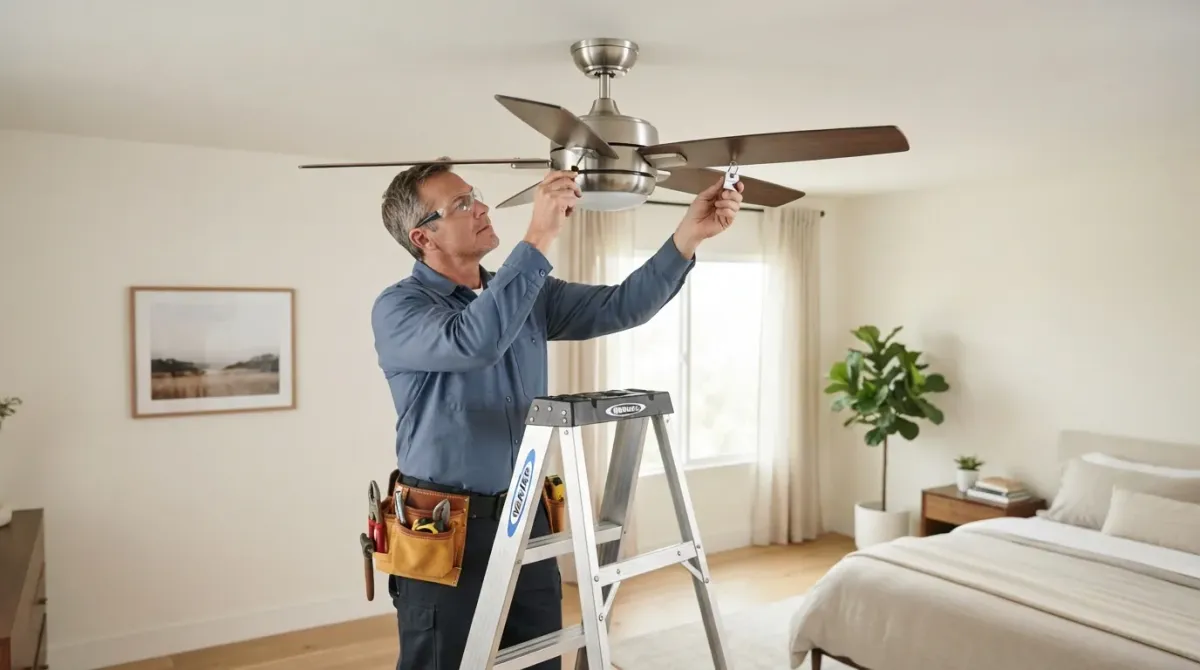
Ceiling fan wobble usually means something is loose, dirty, unbalanced, bent, or mounted wrong. Start with the blades and screws. Stop using the fan if the box or mount looks unsafe.
Key Takeaways
- Angi lists 2026 fan work at a $253 national average, with a $146-$360 range.
- Most wobble checks start with loose screws, dirty blades, and balance.
- A fan on the wrong ceiling box is a safety problem, not a tuning problem.
- RepairHero gives a free estimate, $0 trip charge, and written quote.
What Causes Ceiling Fan Wobble?
Ceiling fan wobble usually comes from movement in the mounting hardware, blade weight, blade shape, or ceiling box. In 2026, Angi lists ceiling fan work at a $253 national average, with a $146-$360 range, which is useful context when a quick DIY fix turns into a service visit (Angi).
The most common cause is also the simplest: loose screws at the canopy, mounting bracket, downrod, blade irons, or light kit. Normal fan movement can slowly back out hardware.
In our experience quoting Murrieta punch lists, many noisy fan calls start as “the motor is going bad,” but the first real culprit is often a loose globe, a loose light kit, or blade dust that changed the blade weight.
Blade balance is the next check. Dust buildup, a warped blade, a mismatched blade set, or a bent blade bracket can make one side of the fan heavier. That small difference is enough to make a wobbling ceiling fan shake harder at medium or high speed.
The serious cause is the ceiling box. HomeGuide notes that standard light boxes are not meant for a fan’s weight and motion, and lists a fan-rated brace box part at $10-$20 (HomeGuide). If the fan is hanging from the wrong box, balancing won’t solve the real issue.
Fixing a Wobbling Fan (2026)
These are national and marketplace averages, not a RepairHero quote — your price comes from a free written quote. RepairHero has a $0 trip charge and a $160 minimum service call on approved work.
| Fix | Typical cost | Notes |
|---|---|---|
| Tighten screws or balance blades (DIY) | $0-$15 | Balancing kit is inexpensive; start here if the mount looks solid |
| Pro balance or remount visit | $100-$250 | HomeGuide lists minimum job fees at $100-$200 or more; Angi lists fan work averaging $253 |
| Move to a fan-rated brace box | $10-$20 | Box part only; labor depends on access and is quoted separately |
Sources: Angi lists professional ceiling fan installation at $253 on average in 2026, with a $146-$360 range (Angi). HomeGuide lists handymen commonly at $40-$80 per hour, a fan-rated brace box part at $10-$20, and minimum job fees often apply (HomeGuide).
How Do You Fix Ceiling Fan Wobble Yourself?
Start with power off at the switch, then check the fan from the top down. A careful tightening and balance pass is worth trying before you pay for a simple visit.
First, tighten the canopy and mounting screws. The canopy is the cover at the ceiling. It should sit snugly without rattling. If the fan uses a downrod, check the set screws, pin, and clip.
Next, clean every blade. Use the same pass on each blade so you don’t leave one blade heavier than the others. In Murrieta homes, ceiling dust can build up fast during dry months.
Then check the blade brackets. Sight across the blade tips while the fan is still. The blades should sit at the same height and pitch. A bent bracket or warped blade can cause ceiling fan shaking even after the screws are tight.
Use a balancing kit last. Clip the test weight to one blade, run the fan, and move the clip until the wobble improves. Then attach the permanent weight where the kit instructions direct. Do not mix blades from another fan; even similar-looking blades can weigh differently.
When we quote a job, we look at the fan first and put the number in writing before any work starts. A wobble can be a quick adjustment, or it can reveal a mount that should not stay in service.
What Ceiling Fan Noise Means
Ceiling fan noise is usually a loose part before it is a motor problem. The Department of Energy says ceiling fans improve comfort by circulating air, but a rattling, clicking, or grinding fan should be checked before daily use (Energy.gov).
A rattle often comes from the light kit, glass globe, pull chain, canopy, or blade screws. Tighten these gently. Glass can crack if overtightened, so snug is enough.
A grinding sound is different. That can mean a dry or worn bearing, a failing motor, or internal contact. If tightening and balancing do not change the sound, stop running the fan until it is checked.
When we look at ceiling fan noise in Murrieta homes, we also check whether the fan is on the right downrod and whether the canopy is touching the ceiling unevenly.
When Should You Stop Using the Fan?
Stop using a hard-wobbling fan if the canopy shifts, the box moves, the fan hangs unevenly, or basic balancing does not help. Angi notes that ceiling fan work ranges from $146-$360 in 2026; that visit is cheaper than ignoring a mount over a bed, sofa, or dining table (Angi).
A ceiling fan that wobbles hard can loosen over time. If it is mounted on a non-fan-rated box, or the wobble won’t stop, stop using it until it is checked. A falling fan is a real hazard.
This is also where scope matters. Tightening, balancing, replacing a bent blade bracket, and remounting on a fan-rated box are handyman jobs. New wiring, new switches, or circuit changes should go to a qualified electrician.
For more detail on the install side, see our guide to ceiling fan installation in Murrieta and the deeper walkthrough on installation and fan-rated boxes. You can also learn more about our team before asking for a quote.
Frequently Asked Questions
Why does my ceiling fan wobble?
A ceiling fan usually wobbles because the mounting screws are loose, the blades are dirty or unbalanced, a blade or bracket is warped, or the ceiling box is not made to support fan movement.
How do I balance a ceiling fan?
Clean the blades first, then use a balancing kit. Clip the test weight to one blade, run the fan, move the clip until the wobble improves, then apply the permanent weight where the kit directs.
Is a wobbling ceiling fan dangerous?
A mild wobble is often fixable, but a hard wobble can loosen the mount over time. Stop using the fan if the ceiling box is not fan-rated or the wobble does not improve after basic fixes.
Can a handyman fix a wobbling fan?
Yes. Tightening loose hardware, balancing blades, replacing a bent bracket, and remounting a fan on a fan-rated box are common handyman jobs. New wiring should go to a qualified electrician.
Why is my ceiling fan noisy?
Ceiling fan noise often comes from a loose globe, loose light kit, canopy screws, or blade hardware. A grinding or persistent motor sound can point to a worn or dry bearing.
Get a Written Fan Wobble Quote
A ceiling fan wobble is usually fixable, but the right fix depends on whether the blades are out of balance or the mount is unsafe. RepairHero gives a free estimate, $0 trip charge, and a written quote before approved work starts.

Gregory Marin — Owner, RepairHero
Gregory Marin is the owner of RepairHero (Grem Construction LLC) and has spent years handling home repairs for homeowners across Murrieta and Oceanside, California.
More about RepairHero →